
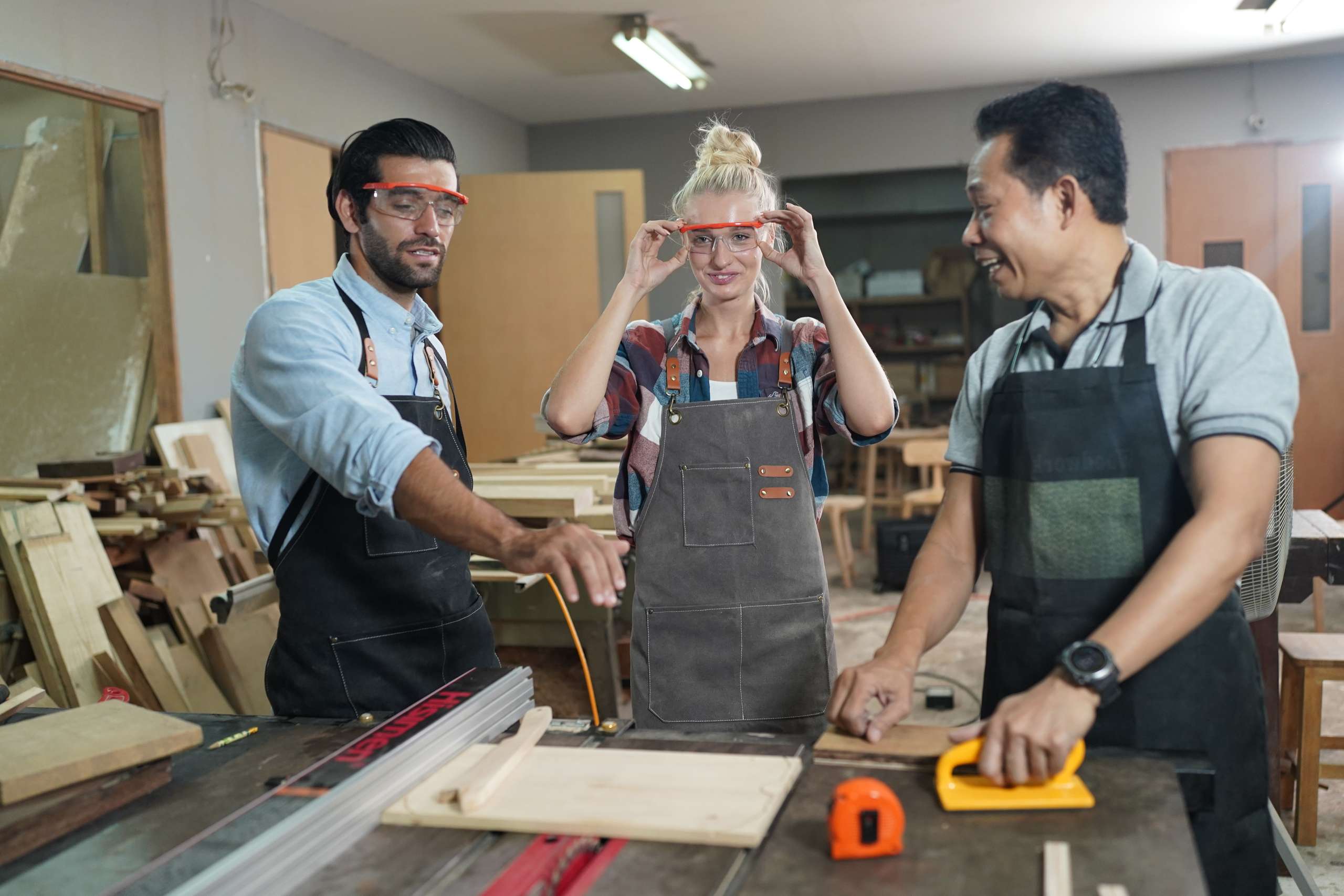
Impatience to make something valuable is a common trap for the newcomer. A big project can mask poor techniques, particularly if the initial few strokes don’t follow the guideline, or if adjacent pieces don’t fit together as they should. Small exercises to understand the interaction between tool and wood are invaluable to a beginner prior to a furniture or craft project. Much can be learned with a piece of wood, a sharp pencil mark, and a handsaw about technique control that could not be learned in a weekend of cutting a project’s parts together that will not quite fit.
Practice by cutting a few straight lines on a piece of scrap wood. Take your time and make the cut. Observe what happens when the blade goes into the wood, how the pressure changes the direction, and how even a slight skew can take the kerf away from the intended cutline. Take the time to look at the edge of the wood from various angles after each cut. If it’s beveled or follows a wavy pattern, try it again, only this time take smaller strokes and reduce the pressure. This meditative practice will help you get a feel for how to hold the saw, and that translates to making accurate joints and tight assemblies later on.
The most typical problem is that the saw is clenched too hard in an attempt to muscle it into accuracy. In truth, this excessive pressure leads to wobble and loss of control, so the best results are achieved with a relatively loose hand while allowing the teeth to do the work. The second most common mistake is failing to keep a small amount of focus ahead of the saw cut, similar to the way you aim to a spot in the road when driving a car, but not fixating on the hood ornament.
Even just a little bit of time each day will help. Take fifteen minutes to draw the lines, saw away, and inspect. Flip the board around to practice in both directions and see what a difference it makes. If you find yourself getting irritated, stop for a second, run your finger over the saw kerf, and feel where the imperfections are. This can often tell you more than your eyes can, and will teach you to compensate the next time you try.
When straight cuts get boring, place two boards edge-to-edge without gluing them, and squeeze them together to test the fit. Any open joints will tell you there is more work to do. This test bridges the theoretical to the practical, helping you understand that everything you build later will depend on this fundamental ability. With enough time, that’s what these simple tasks will help you achieve: They’ll make the thought of tackling difficult projects seem less daunting, since your hands will already know what to do.